11 May 2026
ASX 2026 Outlook: Where High Conviction Buys Are Emerging in NXT, GMD, 360, ZIP and DRO
Australian equities in May 2026 are no longer being defined by a single macro narrative. Instead, they are being pul
Australian equities in May 2026 are no longer being defined by a single macro narrative. Instead, they are being pul
Hi Eason,
*ASX 2026 Outlook: Where High Conviction Buys Are Emerging in NXT, GMD, 360, ZIP and DRO*
Australian equities in May 2026 are no longer being defined by a single macro narrative. Instead, they are being pulled between three forces at once, a renewed tightening cycle from the Reserve Bank of Australia (RBA), a shifting China demand profile, and a structural rotation in domestic equity leadership away from large caps and toward mid and small caps.
The result is a market that looks directionless at index level, yet increasingly directional underneath. The dispersion of returns is widening, and that is where the opportunity set is forming.
*For those looking to position more effectively in this market, we are offering a* *Free Portfolio Review. Click here to contact us and take a closer look at how your portfolio is currently positioned.* ( mark.elzayed@investorpulse.com.au )
*Macro Setting: Policy Pressure Meets Geopolitical Inflation*
The RBA's decision to raise the cash rate by 25 basis points for a third consecutive time in 2026 has re-established a restrictive monetary regime. It has effectively reversed the easing cycle seen in 2025 and re-anchored rates near prior cycle highs.
The motivation is straightforward. Inflation has re-accelerated, with headline CPI printing at levels not seen since 2023, driven primarily by services inflation and rising energy costs. Labour market conditions remain tight, with unemployment still low by historical standards, preventing meaningful disinflation in wages.
Externally, the situation is more volatile. Middle East supply disruptions have lifted global energy prices, feeding directly into imported inflation pressures. This creates a policy bind: domestic demand needs cooling, but much of the inflation impulse is external.
The implication for equities is a higher discount rate regime. Duration-sensitive sectors are structurally disadvantaged, while cash-generative, commodity-linked, and pricing-power businesses retain relative strength.
*China Transition and Commodity Divergence*
China remains central to Australian equities, but its role is evolving. Growth is slower and more state-directed, with less reliance on property construction and more emphasis on strategic industrial policy.
This has created a clear split in commodities:
* *Iron ore* is stabilising as a mature cash-flow driver tied to structural demand rather than expansion
* *Copper, aluminium, and critical minerals* are re-rating due to electrification, AI infrastructure build-out, and energy security investment
* *Gold* is increasingly behaving as a geopolitical hedge rather than a pure inflation proxy
*The net effect is that the Australian resources sector is no longer a single beta trade on China. It is now a multi-speed complex, where commodity selection matters as much as macro direction.*
*The Defining Shift: Small and Mid-Cap Alpha Regeneration*
Perhaps the most important structural change is the rotation of performance leadership into the mid-cap and small-cap universe.
Large caps, particularly banks and healthcare, are facing a ceiling on earnings expansion due to margin compression and slower credit growth. By contrast, Small and Mid-caps are benefiting from three reinforcing dynamics:
* Higher earnings growth starting base
* Faster adoption of artificial intelligence and automation
* Increased M&A activity focused on scalable, cash-generative targets
*This has created what can reasonably be described as an Small and Mid-cap alpha regime, where stock selection matters significantly more than index exposure.*
*Sector Deep Dive: Structural Drivers and Earnings Context*
*Recent reporting cycles across key ASX companies reinforce this dispersion.* NextDC illustrates the infrastructure backbone of the AI economy. Genesis Minerals reflects gold sector consolidation and pricing power. Zip Co shows the transition of fintech from growth at any cost to disciplined profitability. Life360 demonstrates the monetisation of large consumer platforms. DroneShield sits at the intersection of defence spending and asymmetric warfare technology demand.
*NextDC Limited (ASX: NXT)*
NextDC operates a national data centre platform positioned at the core of cloud computing and AI infrastructure deployment in Australia and Southeast Asia.
The latest half-year results show *net revenue of $189.2 million (+13% YoY)* , with *underlying EBITDA of $115.3 million* , reflecting strong operating leverage as utilisation rises across its portfolio. Contracted utilisation reached *416.6MW* , while committed forward order backlog stood at *296.8MW* , providing multi-year visibility into revenue conversion.
FY25 full-year performance recorded *net revenue of $350.2 million* and *EBITDA of $216.7 million* , supported by expanding hyperscale demand and higher utilisation rates across existing facilities.
What stands out for us is the gap between contracted capacity and current billing. That gap effectively sets up a multi-year compounding runway, where revenue is less about demand discovery and more about execution into already secured load. Capital intensity remains elevated, but it is clearly demand-led rather than speculative.
Technically, the stock is consolidating after a multi-year expansion phase. The structure reflects digestion of prior gains, with support forming around earlier institutional accumulation zones. Volume trends suggest steady institutional positioning rather than distribution.
*Genesis Minerals (ASX: GMD)*
Genesis Minerals is a mid-tier Australian gold producer that has consolidated production assets in Western Australia, building scale in a sector increasingly dominated by larger operators.
Recent financial performance has been supported by elevated gold pricing and improved operational efficiency across its integrated asset base. The company reported *net profit after tax in the $80–90 million range (latest half-year)* , driven by stronger realised pricing and improved throughput across key mining operations.
What matters here is the combination of scale and simplicity. Production growth has been achieved without balance sheet stress, and the company continues to operate with a *net cash position* , giving it optionality in a sector where many peers remain capital constrained.
Cash generation has strengthened alongside gold price tailwinds, reinforcing operating leverage to commodity upside without structural cost inflation materially eroding margins.
Technically, the trend remains constructive. We see a persistent sequence of higher lows and controlled retracements, which is typically consistent with steady accumulation through a commodity upcycle rather than short-term speculative rotation.
*Zip Co (ASX: ZIP)*
Zip Co has transitioned from a high-growth buy-now-pay-later disruptor into a disciplined digital credit platform focused on profitability and credit quality.
Latest reporting shows *revenue in the $750–800 million annualised range* , alongside continued improvement in underlying unit economics. The key shift has been credit discipline, where tighter underwriting has materially reduced loss rates compared with prior cycles of expansion.
Earnings quality has improved through a combination of reduced credit losses and better operating leverage. We are effectively seeing a business that has moved from scale-first to margin-first, which changes how the market assigns valuation credibility.
From a credit perspective, repayment performance has stabilised across core markets, and delinquency trends have moderated relative to prior expansion phases. That stabilisation is critical because it underpins the sustainability of earnings improvement rather than one-off recovery effects.
Technically, the structure reflects sustained trend behaviour with shallow retracements. Buyers have consistently re-entered on weakness, which typically signals re-rating anchored in fundamentals rather than momentum alone.
*Life360 Inc. (ASX: 360)*
Life360 operates a global family safety and location intelligence platform with a large recurring user base monetised through subscriptions and advertising.
The company has reached profitability, reporting *net income of approximately $25–30 million in its latest full-year result* , with *annual revenue above $400 million*. The shift here is not just profitability, but the composition of revenue growth.
Monthly active users exceed *70 million globally* , which provides a significant foundation for incremental monetisation through both subscription pricing and advertising integration. The introduction of ad infrastructure has created a second revenue engine alongside subscriptions.
Operating leverage has improved meaningfully. As the platform scales, incremental revenue contributes more directly to margins, which is a key transition point for platform businesses moving from growth to maturity.
Technically, the stock has moved into a broad consolidation phase. Price behaviour reflects stabilisation, with gradual rebuilding of momentum rather than directional acceleration.
*DroneShield (ASX: DRO)*
DroneShield operates in the counter-unmanned aerial systems sector, supplying electronic warfare and detection technologies to defence and security clients.
The latest FY results show *revenue exceeding $200 million* , supported by accelerating global defence procurement cycles and rising demand for counter-drone systems across NATO-aligned markets.
What is increasingly important is pipeline visibility. The company has highlighted a *pipeline exceeding $1 billion in potential contracts* , which reflects the structural shift in defence procurement toward drone detection and electronic warfare capabilities.
We are also seeing a gradual shift in revenue composition, with software-enabled detection systems forming a larger proportion of sales. This improves earnings visibility compared with earlier cycles that were more hardware dependent.
Technically, the stock continues to exhibit high-volatility trend structure. Sharp re-rating phases are followed by consolidation, reflecting contract-driven revenue recognition and episodic procurement cycles rather than smooth earnings progression.
*Year-End Outlook and Scenario Analysis*
The outlook for Australian equities into the remainder of 2026 is best described as a controlled dispersion regime rather than a directional macro cycle. Monetary policy remains the dominant constraint, but its interaction with commodity strength, AI-driven productivity investment, and geopolitical energy volatility is producing a wide distribution of outcomes rather than a single consensus path.
What matters most is not whether the market is “bullish” or “bearish” in aggregate, but how sensitive different segments are to the path of rates, inflation persistence, and earnings breadth.
*Scenario Framework: 2026 ASX 200 and Macro Outcomes*
* *The base case* is defined by gradual disinflation rather than macro acceleration. This supports earnings resilience and selective multiple expansion in structurally aligned sectors such as infrastructure, resources, and industrial technology.
* *The bear case* is driven by energy transmission into inflation, forcing policy tightening despite weakening growth. This compresses valuations broadly, with the sharpest pressure in duration-sensitive equities.
* *The bull case* requires synchronisation between productivity gains and external stimulus. It is the only scenario in which both earnings growth and multiple expansion reinforce each other at index level.
The defining feature of Australian equities in 2026 is not direction, but distribution. Returns are increasingly being determined by dispersion across sectors, balance sheet strength, and exposure to structural capex cycles. The Small-Caps and Mid-Caps segment is no longer peripheral. It is increasingly the primary engine of alpha generation in a market where macro conditions cap index-level expansion but amplify relative performance differences. In that sense, the market is not broadening. It is splitting. And that split is where performance is now being decided.
*For those looking to navigate this shift with greater clarity, we are offering a Free Portfolio Review. This provides an opportunity to evaluate current holdings, identify potential vulnerabilities and explore where stronger, more resilient opportunities may exist. In a market defined by volatility and rapid change, taking a proactive approach can make a meaningful difference.*
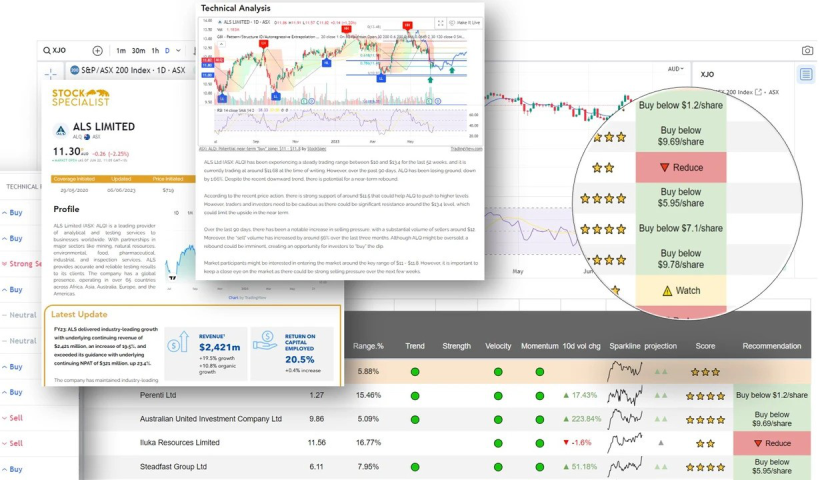
*Example of our Growth Portfolio Review*
Sign up to get your personalised report
( mark.elzayed@investorpulse.com.au )
( mark.elzayed@investorpulse.com.au )
( mark.elzayed@investorpulse.com.au )
( mark.elzayed@investorpulse.com.au )
( mark.elzayed@investorpulse.com.au )
**Free Disclaimer:*
The base platform has no monthly fees, however, brokerage fees apply when buying or selling stocks through the platform.
Many thanks for reading our updates! Feel free to call us or reply to this email with suggestions. If you have some friends you think would be interested, let us know - we have a referral program available.
*Very important & unique disclaimer provided by our legal team*
This email and any files transmitted with it are confidential. If you are not the intended recipient or have received this email in error, you are not permitted to use or disclose its contents - please notify the sender immediately by return email and also delete the email and any files from your system.
Investor Pulse Research ("Investor Pulse") is a registered business name and division of Volatility Pty Ltd (ACN 669 520 174) ("Volatility") is a Corporate Authorised Representative (number 001304496) of Point Capital Pty Ltd (ABN 41 625 931 900), (AFSL No 518031).
No warranty is made as to the accuracy of the information in this message and, to the maximum extent permitted by law, Volatility disclaims all liability for any loss or damage which may be suffered by any recipient through relying on anything contained or omitted from this message. Volatility does not warrant the attached files are free from computer viruses or other defects and is provided on the basis that the user assumes all responsibility for any loss, damage or consequence resulting from use.
Any advice contained in this email is general advice and has been prepared without taking into account your financial objectives, financial situation or needs. Before acting on any advice in this email, we recommend that you consider whether it is appropriate for your circumstances. If this email contains reference to any financial products, we recommend you consider the Product Disclosure Statement (PDS) or other disclosure documents available from us, before making any decisions regarding any products.
Level 9, 255 George Street
Sydney, NSW 2000, Australia